What to Look For in a Charity Shop (A Method, Not Luck)
The people who consistently find good things secondhand are not luckier than you — they are running a method: scanning for material and construction first, and only then looking at the garment. Here is why thrifting rewards method, the scanning system, and how to assess what you find.

Why Thrifting Rewards Method
Skill over luck: the the-volume-requires-a-filter (the sheer volume of racks demanding a fast filter from the thrift-like-a-stylist logic — the volume-needs-filter), the the-good-finds-are-not-luck (the consistent finders running a repeatable method from the thrifting-guide logic — the not-luck), the the-material-before-garment (the scanning for fabric before looking at style from the thrift-like-a-stylist logic — the material-first), the the-condition-decides-value (the condition mattering more than label or era from the thrifting-guide logic — the condition-decides), the the-speed-lets-you-cover-more (the a fast method letting you cover more racks from the thrift-like-a-stylist logic — the speed-covers-more), and the reframe (the secondhand shopping as a method rather than luck — scanning for material and construction first, and only then looking at the garment).
The Scanning System
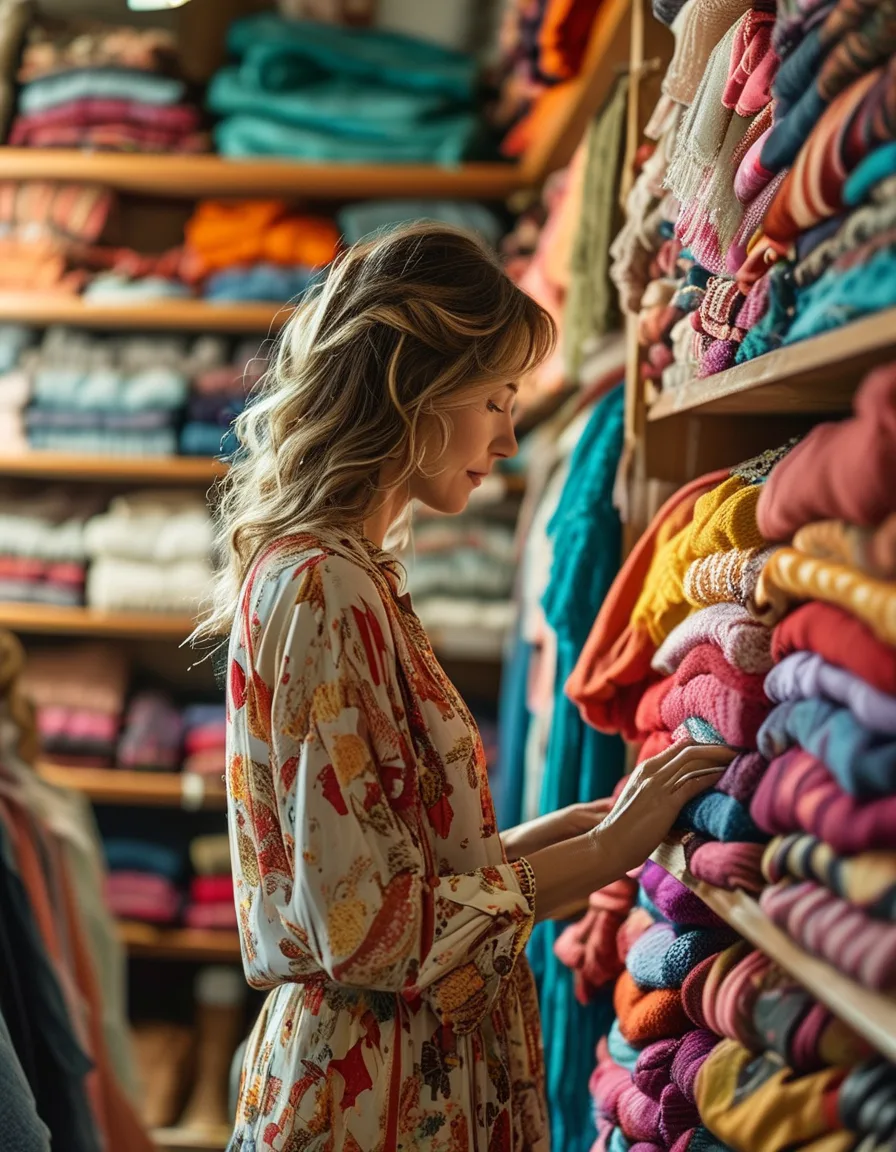
How to work the rails: the the-touch-do-not-look (the running your hand along the rail to feel for good cloth from the thrift-like-a-stylist logic — the touch-the-rail), the the-natural-fibres-stand-out-by-feel (the wool, silk, linen and cotton being identifiable by touch from the thrift-like-a-stylist logic — the fibres-by-feel), the the-pull-out-what-feels-right (the pulling only what feels substantial from the thrift-like-a-stylist logic — the pull-what-feels-right), the the-then-check-the-label (the reading the composition label second from the thrifting-guide logic — the label-second), the the-ignore-the-size-on-the-tag (the ignoring tag sizes, which vary wildly from the thrifting-guide logic — the ignore-tag-size), the the-check-the-whole-shop-not-just-your-size (the searching beyond your usual size and section from the thrifting-guide logic — the beyond-your-size), the the-look-at-menswear-too (the checking menswear for shirts, knits and coats from the thrift-like-a-stylist logic — the check-menswear), and the the-go-often-and-briefly (the frequent short visits beating rare long ones from the thrifting-guide logic — the go-often).
The Assessment Notes
Judging what you find: the the-check-for-damage (the checking underarms, seams and hems for wear from the thrifting-guide logic — the check-damage), the the-check-for-stains-and-smell (the checking for stains and odour that will not wash out from the thrifting-guide logic — the stains-and-smell), the the-check-the-fastenings (the checking zips and buttons all work from the thrifting-guide logic — the check-fastenings), the the-can-it-be-altered (the whether the fit can be tailored to you from the style-vintage-modern logic — the alterable), the the-will-you-actually-wear-it (the being honest about whether you will wear it from the thrifting-guide logic — the will-you-wear-it), the the-does-it-work-with-your-wardrobe (the whether it works with what you own from the style-vintage-modern logic — the works-with-wardrobe), the the-buy-the-fabric-not-the-era (the buying for the cloth rather than the vintage label from the bold-vintage logic — the fabric-not-era), and the frame (the charity shop as a method — feel the rail for good cloth, read the label second, search beyond your size, and check damage, smell and fastenings — a method, not luck. Run your hand along the rail for good cloth, check the label second, search beyond your size, and inspect damage and fastenings).
The people who consistently find good things secondhand are not luckier than you — they are running a method: scanning for material and construction first, and only then looking at the garment. Thrifting rewards method because volume requires a filter, good finds are not luck, material comes before garment, condition decides value, and speed lets you cover more. The scanning system: touch rather than look, identify natural fibres by feel, pull what feels right, check the label second, ignore the tag size, search beyond your size, check menswear too, and go often and briefly. Assess finds by checking damage, stains and smell, fastenings, whether it can be altered, whether you will actually wear it, whether it works with your wardrobe, and buying the fabric not the era. A method, not luck.
Keep Reading
This article is for general styling and informational purposes only. Trends, sizing, availability and pricing may vary by brand and season.